Apart from the pulling and hauling stands what I am,
Stands amused, complacent, compassionating, idle, unitary,
Looks down, is erect, or bends an arm on an impalpable
certain rest,
Looking with side-curved head curious what will come next,
Both in and out of the game and watching and wondering at it.
––Walt Whitman, from Song of Myself
Some things I say about Phase 5
The Practitioner relinquishes epistemological privilege,
asks how do I enter the movement that is already unfolding?
Phase 5 is the point at which the practitioner ceases
trying to lead and begins learning to be led.
Phase 5 is not the abandonment of skill
but the abandonment of the need to be the expert.
The practitioner is no longer the grammatical subject; the living system is.
Phase 5 is less about applying a technique than participating in an unfolding process.
The task is not to impose order but to discover the order already seeking expression.
Curiosity is more useful than certainty.
The practitioner does not correct the body, but changes the conditions
under which the body can discover another possibility.
Healing, in the Ortho-Bionomy sense, is not forcing movement;
it is changing the topology of the field until new movement becomes possible.
Phase 5: The Art of Participation
Phase 5 marks a subtle but profound shift in Ortho-Bionomy. Rather than trying to change another person, we begin to participate in a process of discovery. We learn to let go of the need to know, to fix, or even to lead, and instead cultivate the ability to perceive and respond to what is already organizing itself.
This class explores the principles of reciprocity, presence, and "doing no-thing"—not as techniques to master, but as capacities that emerge through practice. Together we'll investigate how body schema, attention, and relationship create the conditions in which change can arise naturally.
Expect less emphasis on "doing it right" and more on curiosity, play, and the surprising intelligence that becomes available when practitioner and client learn together.
Whether Phase 5 is new to you or a familiar companion, this class offers an opportunity to deepen your trust in the body's innate wisdom—and in your own capacity to participate with it.
Phase 5 Menu
Most of these "techniques" are from Dr. Pauls's original teaching. He originally included Phases 5 and 6 in one workshop, which he called "Advanced." I call this a menu, as only a selection can be adequately presented in any given 16-unit workshop. Some of the Reflexes are also included here. Though the Reflexes apply through all Phases, they are often included, by tradition, in Phase 5 workshops.
A number of techniques that Pauls presented in his workshops have not stood the test of time. Typically they are awkward to perform and vague about the why. They are here as ghosts, they may show up, they may not.
First, some words about Phase 4
Some say that Phase 4 needs to be understood before moving on to the later Phases. I do not subscribe to this belief; the Phases don't work in any particular order, the numbers were initially ordinal, and a history of when ideas and practices occurred to Pauls. But I will present a simple way to understand the underlying principle of Phase 4, which is based on the idea of Positional Release. I encourage you to take some Phase 4 workshops and learn to apply the principle throughout the body.
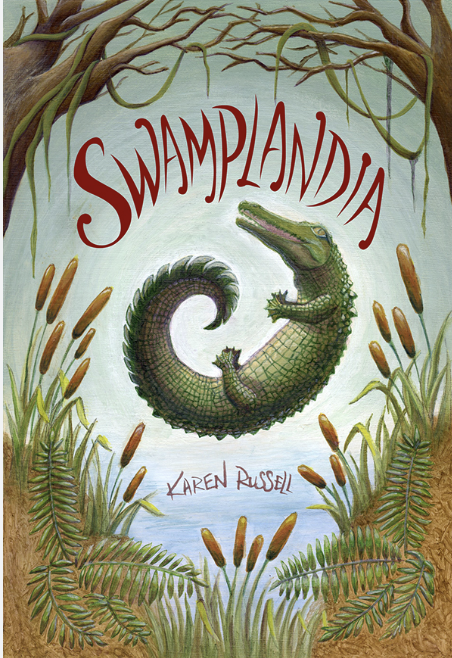
The novel Swamplandia, by Karen Russell, tells a story about a young woman whose mother was a world-famous alligator wrestler in Florida, and the heroine aspires to follow in her mother's footsteps. She asks the question, What does an alligator do if you kick it? She answered: It wraps around your boot. This seemed to me a lovely description of what the body does in response to pain. It tries to wrap around the sore point. Needless to say, we will be doing no kicking, only lightly touching, but look at ways the body tries to comfort itself by wrapping around where it hurts. Phase 4 teaches ways to assist the body in wrapping around, or huggging itself where it hurts.
A Game We Will Play
Most of you no doubt know the childhood game called Simon Says. I remember this game taught in grade school, the teachers thinking that the tykes will learn to listen carefully and follow instructions. That is not our purpose.
Pauls wrote (in Shivambu Kalpa): "the patients bring about their own correction by directing the operator's hands, by a mentally patterned proprioceptive neuro-etheric muscular reflex."
I confess that I have always found much of what Pauls said or wrote to be mystifying, verging on gibberish, even though what he was able to do was extraordinary. My way of putting it to words may be equally mystifying to some, but through play it will come to make sense in your hands.
In this game doing it "wrong" is as useful as doing it "right". Through playing the game you will begin to 'feel' your own body schema at work; most of the work of the body schema is below consciousness, as opposed to the concept of body image. [A succinct, though somewhat techical review of the concepts can be found HERE. There are a few books on the topic, easy to find on Amazon and such sites, possibly in your local library. They are mostly on the pricey side.]
There are but a few basic actions a body does; nine of these (sorry, Arthur, not 7):
- Sensing (different from perceiving)
- Moving
- Holding
- Letting go
- Coupling
- Orienting
- Attending
- Choosing
- Yeilding
The body maintains (in the brain) a representation (map or model) of itself called the body schema. Occasionally this is referred to as a homunculus (as in the recent book Tell Me Where It Hurts). To intentionally move, the body first emulates the movement, then the flesh follows. The body schema is built based on sensory input of a variety of sorts (multimodal). It continuously updates (plastic). In response to injury (trauma), it holds the body in a position to aid recovery and healing. It does not always allow the release, or letting go, after the healing process is done. This is the fleshy base of what's come to be known as post-traumatic stress disorder (PTSD). Another feature of the body schema, which is particularly relevant to our purpose, is that it is interpersonal. From Wikipedia, citing neuroscientists Patrick Haggard and Daniel Wolpert:
It is thought that an individual's body schema is used to represent both one's own body and the bodies of others. Mirror neurons are thought to play a role in the interpersonal characteristics of body schema. Interpersonal projection of one's body schema plays an important role in successfully imitating motions such as hand gestures, especially while maintaining the handedness and location of the gesture, but not necessarily copying the exact motion itself.
The degree to which the body schema is interpersonal remains an open question among neuroscientists, but based on the experience of my senses, in my hands, in my body, and in the results. I take a stance on the side of it being vigorously interpersonal. Regardless of what the neuroscientists ultimately agree on we will play as if our bodies share a body schema.
Whatever the truth of the matter, we will play the game and you will get a chance to catch yourself in the act. This game will move on to Follow the Leader until it becomes leaderless.
Not Doing
The next game we will play with will be doing by not doing. This will also involve learning one of the Reflexes: Rebound(Recoil). Most likely we will do this from the feet though there are many applications.
There are many ways for injury to be inflicted. Words can damage the body schema just a much (or even more) as sticks and stones. The old childhood adage is a dangerous lie. Oft-repeated words can cripple for life. Here is a poem to consider, written by the late Margret Netherby (long before she became an Ortho-Bionomy practitioner and the first and long-time editor of the Ortho-Bionomy Newsletter. From Some of My Seasons:

The Mantle
Long ago when I was cold and lonely
My mother taught me to sew
The seams of my life
Into a chemeleon-colored cloak,
The fabric woven if smiles and pleasing grace.
"This coat will see you through everything," she daid
It was my mother's best give
Passed through generations unto me.
The mantle made for my protection,
I learn, is neither opaque or cloth.
The glass mantle that shelters my back
Is stuck fast
To my flesh, my spine, my words.
And now,though I ache to lay it down,
I cannot just do that.
But when Iook through the lens of other's tears
The brittle garment shatters
One piece at a time,
And I bleed my own sorrows
Like spilled wine.
The "Techniques"
Presence can be thought of as the "ur-technique" or the technique that isn't a technique. Pauls constantly spoke of the importance of being present. This was the basis of his "cranial" approach. I put the word in scare quotes because it has nothing to do with the cranial bones. Put your hands on the other's head, be present, and let your hands go where they will. He also emphasized timing. I think the two, presence and timing, are one and the same.
But what is presence? That is a dangerous question; dangerous because "presence" is one of those words everyone nods at until you ask what it means. In and Ortho-Bionomy context I might begin here:
Presence is the capacity to participate in another's unfolding without imposing one's own agenda.
That immediately distinguishes it from mere attentiveness. A predator is attentive. A chess player is attentive. Presence is something else.
Or perhaps:
Presence is sustained receptivity without passivity.
You are not absent. You are not inert. You are exquisitely available.
But I want to go even further, thinking in terms of body schema rather than bodies. In that light, presence is not something I have while you have your body. Presence is what emerges in the overlap of two organizing fields.
So perhaps:
Presence is the emergence of a shared body schema in which both practitioner and client become participants rather than observer and observed.
That sounds abstract, but it has practical consequences. When presence is there, neither person feels alone in the process. Neither is leading; neither is following. Leadership and following become fluid.
This is where I think the phrase The Spectral Body becomes especially useful. The "spectral" body is precisely the body that is not reducible to flesh. It includes expectation, possibility, memory, orientation, affect.
Then presence becomes:
The willingness to inhabit the spectral body together.
Notice what disappears from that definition. There is no mention of healing. No mention of energy. No mention of intention. Those may or may not occur. Presence is prior to them.
Arthur Pauls' phrase "doing no-thing" suddenly becomes much less paradoxical. Doing no-thing doesn't mean inactivity. It means refraining from replacing the client's organization with your own. I risk one more definition:
Presence is the disciplined refusal to become more interesting than what is emerging.
The ego of the practitioner steps aside, not because it is bad, but because something more subtle deserves center stage. It is also the core of reciprocity; it is not something one person gives another. It is something that continually educates both participants. The practitioner becomes more present through the client's unfolding, just as the client becomes more present through the practitioner's attention.
Which leaves me with one final thought. I wonder whether presence is not a noun at all. Nouns tempt us to think of things. Phase 5 has always struck me as a verb. Not presence but presencing. Not a quality one possesses, but an activity of coming into relation.
Simon doesn't say, "Do Positional Release"
One hand on top of the other's head, a finger of the other hand finds a tender point along the side of the neck. You would bend the neck around your finger, move the head until the tissue softens, tenderness reduces (the alligator wrapping around the boot), but you don't do the move with your flesh, only with your body schema; then you wait until you feel movement happen and you support and follow the movement.
You may notice that there is some sort of change in your mood, you may feel a bit dreamy.
The Practices
Some Applications of the Rebound(Recoil) Reflex in Phase 5
Releasing the Kundalini
This is pure Pauls. Kundalini is a form of divine feminine primal energy that rests dormant and coiled at the base of the spine. It is often portayed as a serpent at the base of the spine, related to the Caduceus, the symbol of medicine. Both symbols use serpentine lines and a central axis to represent the vertical rise of inner power, balance, and profound transformation. Pauls traveled and studied in India and Kundalini originated in ancient Indian traditions. Kundalini can be awakened through spiritual practices, meditation, and yoga to achieve higher consciousness and liberation.
This is a slow and quiet practice, requiring patience. Only on a few occasions have I experienced the "awakening" of the Kundalini. But I have found this extremely useful even when Kundalini stays sleeping, with clients experiencing a PTSD displacement (in another time and place) often referred to as dissociation.
Holding the other's head, think about compressing toward the sacrum. Here is a place to practice the first Reflex, Rebound(Recoil); let up when it feels as if the head is pushing back against you, then resume when it feels as if you are allowed. You will feel as if you go further down the spine each time. Stop when no longer allowed. It doesn't matter in the least if you don't get all the way to the sacrum. You are doing this without the intention of getting anywhere. This is what makes it difficult. Everyone wants to have that experience of releasing the Kundalini.

Balancing Acts
Our bodies are said to have bilateral symmetry, but this is only approximate. Various deviations from symmetry are common and even necessary. Sometimes asymmetry may be problematic.
An exercise from Tai Chi. As we stand, we will flow our weight from one leg into the other. Do the same with hands. We do something similar with the Volery Syndrome.
Something in us wants to move toward symmetry. These practices can be seen as transitional from Phase 4 to 5. Something that is now rarely taught is called General Release; it can be a way to begin a session, looking for patterns of tension throughout the body. The General Release is related to these exercises.
Some examples of specific applications of the Balancing Acts
a) Trapezius balance
b) Rib balance
c) ASIS balance
d) Sacral balance
e) Sacro-thoracic balance
f) Ear balance
g) Eye balance
h) TMJ
i) Floating the Bones (fibula)
j) Others....
Foot Bones
Bones in the feet can be played with in a very Phase Four manner, but it is often far more effective to approach these bones and their near-rigid joints more like the cranium. I cover some of this when I teach a Cranial workshop. I call the feet the "Lower Cranium", situated over the Earth brain.
The effect will be both local and systemi; in Phase 4 the effects will be felt almost entirely in the feet; in this Phase 5 mode effects are felt all the way up to the pelvis and often further as shifts happen throughout the body. We are not put together from parts, though it often seems that way as hips and knees are now routinely placed with artificial joints.
D. Sternum and ribs
E. Fibula
F. Using Rebound
1. to work with connective tissues (tendinitis and injuries)
2. Ankles and knees
3. Up and down the spine (Arthur’s Kundalini Release)
G. Anchoring
This is a technique is also a kind of balancing act, but more sophisticated. It could be presented in a Crainial class and has been one of the most useful skills I have found to work directly with PTSD.
1. CAUTION: this way of working can require great skill from a
practitioner. Do not use with severe dissociative disorders unless you are
confident in your abilities to manage any situation that may arise. Start by
practicing with simple anxieties and tensions and moving to feelings of
calm, peace, relaxation.
2. You take a snapshot of how you feel in your person while the client is
in a particular state.
3. You can later recall the feelings of this snapshot while in connection
and the person will move to that state.
4. Usually done while cradling the head, connect with the person in a
Phase Five manner, moving together (up and down the spine, around the
cranium, more intrinsic than extrinsic).
5. Explore the space of the connection and the changes in the person.
6. If there is a problem with dissociating, for instance, find where the
space or state where the person begins dissociating and snapshot that state
for yourself then move away. Recall the fell of that from another space or
state and the person will experience the sense of dissociating. Move back
and forth, in and out, and the person starts learning how to control this
movement.
7. This requires close communication with the client reporting any
anxieties and changes.
8. Post techniques are often good to finish with. Make sure the person is
clearly present before ending.
9. This can be thought of as related to the Reciprocal Action reflex (Regret Reflex)
Phase 5 Isometrics
We will look only briefly at these ways of doing isometrics, as I devote an entire class to this. I bring this way of applying isometrics to your attention as it is unlikely other instructors are aware of this way of applying isometrics.
From Phase 5 Isometrics to Chapman's Reflexes
An elegant way to soothe active Chapman's Reflex points, preventing negative reactions. The Chapman's Reflex Network is a vital part of the body's ability to hold a repair posture (splinting). As I see this network, it is closely connected with the body schema, how psyche connects to soma. Unless we really stray from the intention of this workshop, I only mention this in passing.
The Seven Reflexes
These "exercises" will be presented as need arises and time allows. I will describe them in greater detail in another section. I simply list them here. It is clear Pauls had a fascination with the number seven.
1. Follow-On Response
2. Rebound Reflex
3. Ongoing Action
4. Regret Reflex
5. Volery Syndrome
6. Ciny Time Zone
7. Space Between the Notes
Pauls notes, "All of these refleses may be used in Phases Four through Seven."
PHASE FIVE AND
Trauma is widespread in Australia, with an estimated 75% of adults
experiencing a traumatic event in their lifetime.
With more than twenty years of clinical experience, most of it working as a Behavioral Health Nurse for the US Army, I found that the perspective of what we call Phase 5 to be the most effective . The orthobionomer automatically employs "Trauma-Informed Care" when approaching the client from the Phase Five perspective.
It has been estimated that 90% of people who experience severe traumatic events will recover within about six months, with no professional intervention. Recovery is the natural course; what are the barriers to recovery? The goal is to discover these barriers and remove them so that metabolism may continue.
Some of these may be played with depending on time, interest, and level of experience in the group.
- Chapman's Reflexes and Isometrics
- Rebound(Recoil) down the spine (Kundalini) and other long lines along limbs
- Anchoring
- Ciny Time Zone
 Print
Print 